by
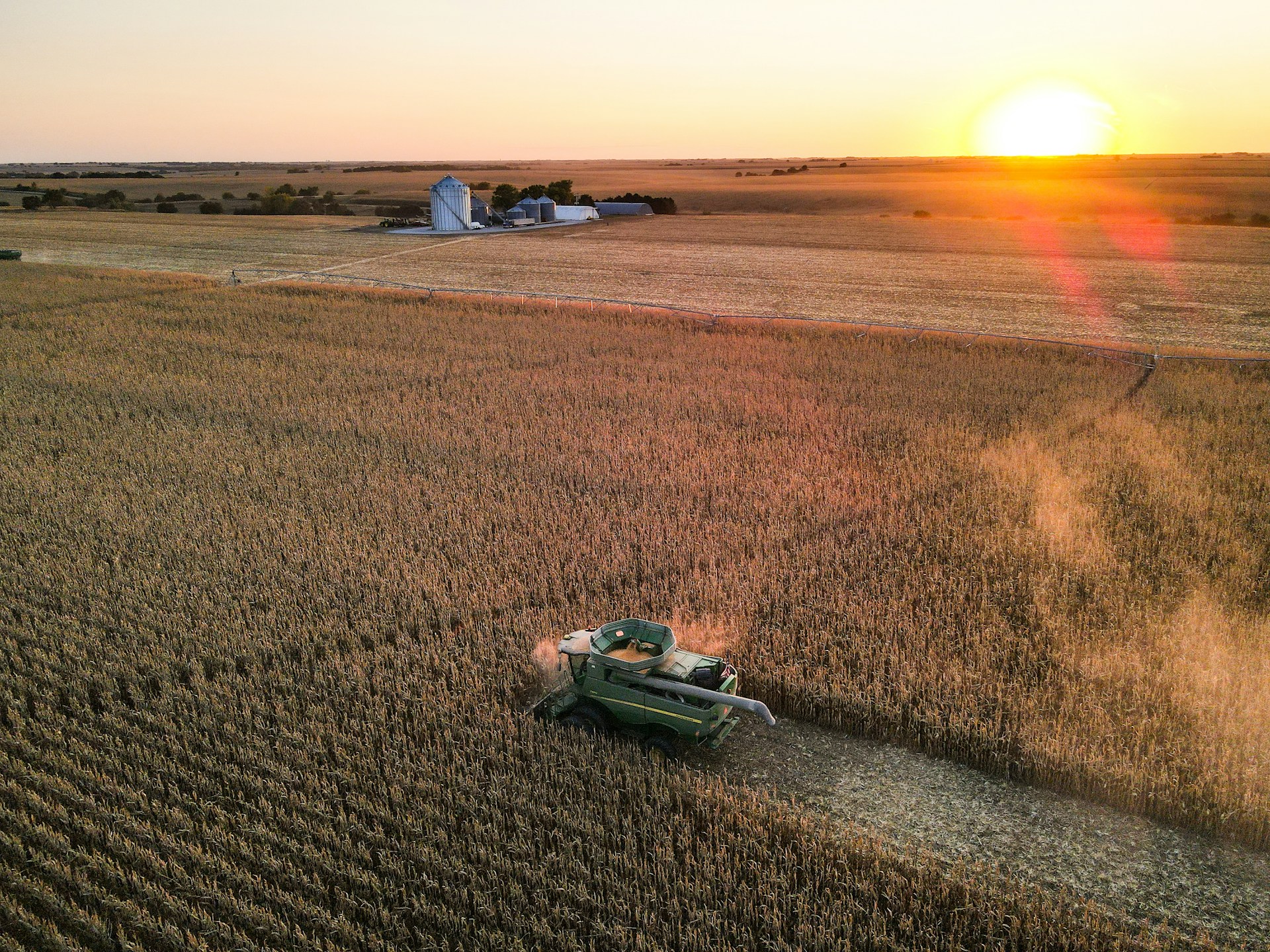
LANSING, Mich. — Michigan farmers made rapid progress harvesting soybeans last week, but the state’s corn and sugar beet crops remained well behind their usual late-October pace, according to new federal estimates.
The U.S. Department of Agriculture reported that 28% of Michigan corn had been harvested by Oct. 25. That was up from 13% one week earlier but still 15 percentage points behind the five-year average of 43%.
Sugar beet harvest reached 30%, compared with an average of 42% for this point in the season.
Soybeans presented a different picture. Farmers harvested nearly one-third of the crop during the week, moving from 37% to 69% complete. That put Michigan seven percentage points ahead of its five-year average.
A Critical Period for Thumb Farms
The uneven progress has particular importance in Michigan’s Thumb, where corn, soybeans and sugar beets shape the fall workload for farms, elevators, trucking companies and processing plants.
Michigan Sugar Co. operates factories in Sebewaing, Caro, Croswell and Bay City. The cooperative says its 865 grower-owners plant and harvest approximately 140,000 acres of sugar beets annually across about 20 Michigan counties and Ontario.
That places three of the company’s four factories directly in or beside the Thumb’s major agricultural counties.
The USDA report does not explain why Michigan sugar beet harvest moved only four percentage points during the week. Conditions can vary substantially from farm to farm, and processors may control delivery schedules to manage how many beets enter storage piles or factories at once.
Michigan farmers nevertheless had nearly a full week available for fieldwork. USDA estimated 6.9 suitable days during the week ending Oct. 25, up from 4.9 days a week earlier.
Delayed Corn Faces Slower Natural Drying
The corn delay creates a different set of decisions.
Michigan State University researchers reported earlier in October that much of the state’s corn reached physiological maturity late. Corn must continue losing moisture before it can be stored safely or sold without substantial drying.
Field research conducted at Lansing from 2021 through 2024 found that natural kernel drying generally slows as autumn advances. The average rate fell from 0.58 percentage points per day during the first week of October to about 0.25 during the final week. Researchers projected a decline to 0.18 in early November and 0.13 by the second week of November.
Those figures do not predict moisture in any individual field. Hybrid maturity, planting date, rainfall, temperature, humidity and sunlight can all change the drying rate.
The practical issue for farmers is whether to leave corn standing longer or harvest wetter grain and pay for additional drying. Waiting may lower drying expenses, but it can also increase exposure to wind, lodging, wildlife damage and deteriorating field conditions.
Crop Condition Remains Generally Favorable
Despite the delayed harvest, USDA rated 62% of Michigan corn as good or excellent. Another 32% was rated fair, with 6% rated poor or very poor.
Winter wheat planting also moved ahead. Michigan farmers had planted 75% of the crop, slightly above the five-year average of 73%. About 61% had emerged.
The weekly figures remain preliminary. USDA’s crop-progress estimates come from a nonprobability survey of agricultural reporters, including extension agents and Farm Service Agency personnel. Reporters provide subjective estimates that the agency weights and reviews.
The report provides statewide numbers rather than separate estimates for Huron, Sanilac and Tuscola counties. Local conditions could therefore be considerably ahead of or behind the Michigan totals.
Primary sources: USDA Crop Progress report | MSU corn dry-down analysis