by

A Wells Fargo letter about a refund or an unfamiliar financial product deserves a closer look before you throw it away. It may concern compensation, but a letter alone does not prove that you qualify for money or that the sender is legitimate. Verify it through the bank before sharing information or acting on payment instructions.
Updated Oct. 29, 2026. This article updates our November 2023 report and removes unverified payout estimates.
What a Wells Fargo letter about remediation means
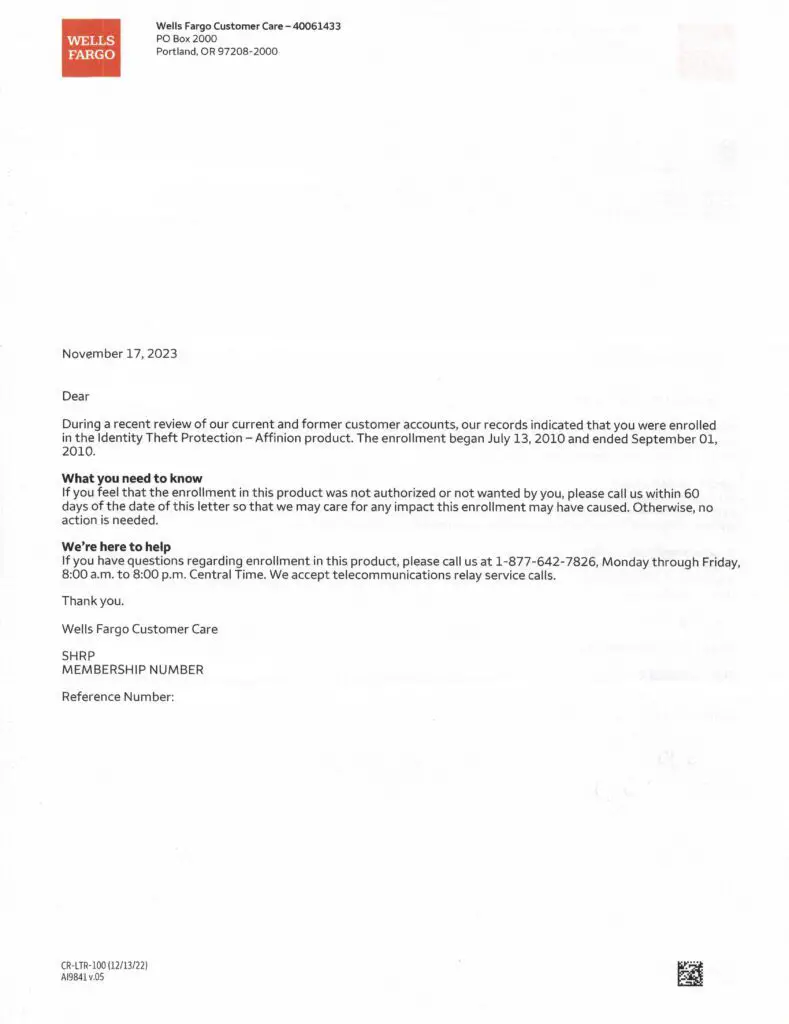
Remediation means an effort to correct a problem that affected a customer. A notice may describe an account, fee or product enrollment and ask the recipient to contact the bank. The details of that specific notice matter more than a general settlement headline.
Our original report discussed correspondence describing “Identity Theft Protection — Affinion.” It also linked to a Reddit discussion about the letter. Those posts are personal accounts, not official verification of any reader’s notice, eligibility or payment amount.
We have not established that the identity-protection letter described in the original article was issued under the December 2022 CFPB order. Readers should ask Wells Fargo to identify the program connected to their own correspondence.
How to verify a Wells Fargo letter: 5 steps
- Keep the letter and envelope. Make a copy and note the product name, reference number, stated deadline and date received. Keep those details private.
- Find the bank independently. Use the number on your bank card or type wellsfargo.com into your browser. The bank’s official contact page lists general banking assistance at 1-800-869-3557. Ask which department can verify the notice.
- Confirm the specific notice. Ask whether the bank issued it, which account or product it concerns, whether a response is required and what deadline applies. Verify any administrator or response address before using it.
- Request a written explanation. If compensation is offered, ask how it was calculated and how to request a review if you believe information is missing. A larger payment is not guaranteed.
- Keep a record of the response. Save correspondence and write down the date, department and case number for each conversation. Ask for clarification if the next step remains unclear.
What the $3.7 billion Wells Fargo action actually covered
On Dec. 20, 2022, the Consumer Financial Protection Bureau ordered Wells Fargo to provide more than $2 billion in consumer redress and pay a $1.7 billion civil penalty. The CFPB enforcement record describes problems involving auto loans, mortgage servicing and deposit accounts.
The $3.7 billion total was not a single fund available equally to everyone who received a letter. The penalty and customer redress were separate parts of the action, and the announcement did not establish an individual reader’s eligibility.
Wells Fargo announced on Jan. 28, 2025, that the 2022 consent order had terminated. That historical action should not be presented as a newly opened claims program in 2026.
Warning signs that require a pause
Wells Fargo’s phishing guidance says not to share your PIN, online banking password or one-time access codes. Avoid links and QR codes in unexpected communications until you have verified the sender independently.
A request to transfer money to a supposedly safe account is a serious warning sign. Wells Fargo says it will not ask customers to move money to stop fraud. Contact the bank through a trusted channel if someone pressures you to make a transfer, keep a conversation secret or provide remote access to your device.
Common questions about a Wells Fargo letter
Does receiving a letter mean I will get a check?
No. A notice may request information or explain a review. Ask the bank what, if anything, you are eligible to receive.
Can I negotiate a specific payout?
This article cannot verify a standard payment or a guaranteed increase. The earlier version cited online reports of $30 to $250 offers; those figures have been removed because they were not a reliable guide to individual claims.
What if the letter is old?
Ask whether a response or review is still possible. Do not assume that a deadline mentioned in someone else’s online post applies to your case.
What if I already shared sensitive information?
Contact Wells Fargo promptly through its official fraud-reporting page or a trusted bank number. Explain what you shared and follow the bank’s account-protection instructions.
Before discarding a Wells Fargo letter, verify it. Keep the notice, confirm its purpose through an independent bank contact and get clear instructions for your specific situation.